

If you inquire with anyone who runs a car-wash or detailing business in an Indian city that’s bustling, you can’t avoid hearing a similar tale of long lines of vehicles at the gate, two or three washers working at breakneck speed, and customers looking at their watches. Manual washing is no longer capable of keeping up with the volume of vehicles on the roads in India today.
It’s slow, it eats through water, it depends entirely on how many hands you have on shift, and the finish varies from car to car depending on who washed it. That’s the exact gap an automatic car wash fills and more owners across Tamil Nadu, including Coimbatore, are now looking seriously at this shift, not as a luxury, but as the only realistic way to keep up with demand.
What Is an Automatic Car Wash System?
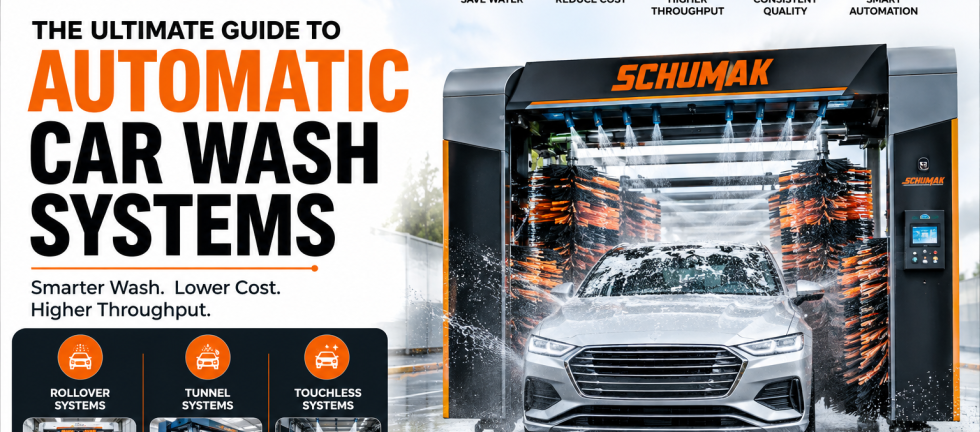
Such a system is a type of apparatus that can wash a vehicle mechanically, with little or no manual washing, using rotating brushes, jets working under high pressure, foam applicators, and dryers assembled in a preset sequence.
There are a few common formats:
- Rollover systems – The vehicle stays parked while the wash unit itself moves back and forth over it, applying soap, brushes, and rinse in passes. These suit sites with limited space and moderate daily volume.
- Tunnel systems – The vehicle moves through a fixed line of equipment on a conveyor, passing through wash, rinse, and dry stages. These are built for high-volume operations that need to process a large number of cars quickly.
- Touchless systems – High-pressure water and chemical cleaning agents do the work without any brush contact, reducing the risk of surface scratching, which matters for owners worried about paint damage complaints.
For a first-time buyer, the honest answer is that no single format is “best” ; the right choice depends on your daily car count, available space, and how much you’re willing to invest upfront versus recover over time.
The Real Problems Of Automatic Car Wash Buyers Face
Before jumping into equipment specs, it’s worth naming the actual problems that push owners toward automation in the first place, because these are the same problems that keep showing up in conversations with garage owners and franchise operators. An automatic car wash can address many of these operational challenges.
Water and labor costs keep climbing. Manual washing uses more water than most owners realize, since buckets and hoses aren’t controlled the way a closed-loop automatic system can be. Add wages for two or three washers per shift, and the cost per car adds up fast even before accounting for water wastage that a metered, mechanized system would avoid.
Wash quality is inconsistent. A vehicle can be cleaned quite thoroughly by one vehicle washer; but another, being pushed due to heavy demand for their services, may fail to clean the underparts of the vehicle or leave unwanted stains. Customers are aware of the situation, and inconsistencies in service will ensure that a business does not survive in a competitive market where every customer matters.
Peak-hour queues hurt revenue. Weekend and festival-season rushes are when a car wash makes real money, but manual washing has a hard throughput ceiling; you can only add so many workers to a bay before they’re working over each other.
Staff turnover disrupts operations. The task of washing vehicles is a rather laborious one, and there is a lot of turnover in this type of work making it necessary for business owners to constantly retrain new personnel in the process of maintaining an acceptable level of service.
Scaling is hard without more space or more people. Growing a manual-wash business usually means hiring more staff or expanding the physical footprint both of which raise fixed costs faster than revenue grows.
An automated wash system addresses nearly every one of these at once: it controls water use, reduces dependency on a large labor pool, standardizes the wash quality on every vehicle, and lets a business process far more cars per hour than a manual crew ever could.
Types of Automatic Car Wash Equipment – Which Fits Your Business?
Not every wash business needs the same setup. A quick way to think about it:
- Small independent garages or single-bay operators – a rollover system usually makes more sense, since it needs less floor space and a lower upfront investment while still dramatically cutting labor dependency.
- Mid-size car wash outlets with steady daily traffic – tunnel systems start to pay off once volume is consistent enough to justify the larger footprint and higher throughput capacity.
- Detailing-focused businesses or paint-sensitive customers – touchless systems are worth considering specifically because they reduce the risk of swirl marks and scratches that brush-based systems can occasionally cause.
The mistake many first-time buyers make is choosing equipment based on price alone rather than matching it to actual daily vehicle volume. An oversized tunnel system sitting half-idle is just as costly a decision as an undersized rollover unit that can’t keep up with weekend demand. An automatic car wash system should therefore be selected based on vehicle volume, available space, service requirements, and the type of customers being served.
Automatic Car Wash in Coimbatore- Growing Demand
Coimbatore’s growth as a manufacturing and engineering hub has brought a steady rise in vehicle ownership across the city and its surrounding industrial belts. That growth is visible in the number of new car wash and detailing outlets opening along major roads and near residential townships and most of them are competing on the same two things: speed and consistency. An automatic car wash can help these businesses meet both demands more efficiently.
This kind of automated equipment isn’t just a convenience anymore for these businesses; it’s becoming a competitive necessity. Customers in a city with this much daily commuter and industrial traffic increasingly expect a wash that takes minutes rather than the better part of an hour, and they expect it to look the same every visit, something manual crews under time pressure struggle to guarantee consistently.
What often holds Coimbatore operators back isn’t interest in automation, its uncertainty about after-sales support. A wash system is a significant investment, and owners want confidence that if a motor, brush assembly, or pump needs servicing, help isn’t a multi-day wait away. That single concern local service reliability tends to be the deciding factor between owners who commit to automatic systems and those who stay stuck with manual crews longer than they’d like.
How Schumak Equipment Solves These Problems
This is where Schumak Equipment (India) Pvt Ltd becomes directly relevant to the concerns raised above. Schumak has operated as a worldwide leader in automotive service equipment since 1999, carrying an ISO 9001 certification and 25 years of experience serving both OEM workshops and private garages across a wide range of automotive service equipment. Its automatic car wash solutions are designed to support businesses looking to improve washing efficiency and reduce dependence on manual labor.
A few specifics matter here for a buyer weighing the pain points covered earlier:
- An engineering department and a dedicated field team. Schumak maintains an in-house engineering function alongside a field team focused on continuous improvement, which directly addresses the after-sales anxiety that stops many Coimbatore operators from committing to automation; there’s a structured support system behind the equipment, not just a one-time sale.
- A core value built around mutual trust. Schumak describes its approach as one of respecting and trusting customers to achieve results, with a stated focus on adding value beyond the sale itself – the kind of long-term relationship a business owner actually wants from an equipment partner they’ll depend on for years.
- A track record customers speak to directly. Testimonials shared by Schumak’s own customers point to consistently reliable machinery, responsive service and guidance, and confidence in choosing a brand with strong quality control. Multiple reviewers specifically highlight satisfaction with Schumak’s product quality being manufactured in India, and describe the company as one of the more trustworthy names in the garage equipment space based on years of hands-on use.
For an owner in Coimbatore trying to decide whether automation is worth the investment, that combination of 25 years in the industry, ISO 9001 certification, and a real engineering and field-support structure is what turns the decision from a gamble into a calculated business move.
What to Look for Before Buying an Automatic Car Wash System
A checklist worth going through before signing off on any equipment:
- Vehicle throughput needs – Count your actual daily and peak-hour vehicle volume before choosing between rollover, tunnel, or touchless formats.
- Water consumption and recycling – Ask specifically how much water the system uses per vehicle and whether it includes a recycling or reclaim setup, since this directly affects running costs.
- Space requirements – Tunnel systems need considerably more floor length than rollover units; confirm your site can actually accommodate the format you’re considering.
- Automation level – Decide how much of the process (foam, brush, rinse, dry) you want fully automated versus assisted by staff.
- After-sales support and service network – Confirm a technician can reach your location quickly if something breaks down; this is consistently the deciding factor for buyers in Tier 2 cities.
- Certifications and build quality – Favor manufacturers with recognized quality certifications like ISO 9001, since it reflects consistent manufacturing standards rather than a one-off good batch.
Frequently Asked Questions
What is an automatic car wash system? This kind of system is equipment rollover, tunnel, or touchless that cleans a vehicle mechanically using brushes, high-pressure jets, foam, and dryers in a set sequence, reducing the need for manual scrubbing and standardizing wash quality.
Is an automatic car wash worth it for a small business in India? Often yes, particularly for owners struggling with labor turnover or inconsistent wash quality. A smaller-footprint rollover system can significantly cut labor dependency while keeping upfront investment manageable for a single-bay operation.
How much water does an automatic car wash use compared to manual washing? It varies by system, but automatic setups with recycling or reclaim features generally control and reduce water usage more effectively than manual washing, where buckets and open hoses make consumption harder to manage precisely.
Does an automatic car wash need much floor space? It depends on the format: rollover systems need relatively little space, while tunnel systems require a longer, dedicated footprint. Site size should be measured against expected daily vehicle volume before choosing equipment.
Final Thoughts
Manual washing was never built to handle the volume Indian roads are producing today, and the businesses feeling that strain the most are the ones still relying entirely on hand-washing crews.
This kind of automated equipment solves the throughput, consistency, and labor-cost problems in one move, and for owners in Coimbatore weighing that investment, working with an established, ISO 9001-certified manufacturer with 25 years of experience like Schumak Equipment removes much of the uncertainty around long-term service and support.
An automatic car wash can help businesses improve washing efficiency while handling higher vehicle volumes. If queues, inconsistent quality, or rising labor costs have been holding your wash business back, it’s worth taking a look at schumakindia.in to see what the right system could do for your operation.