

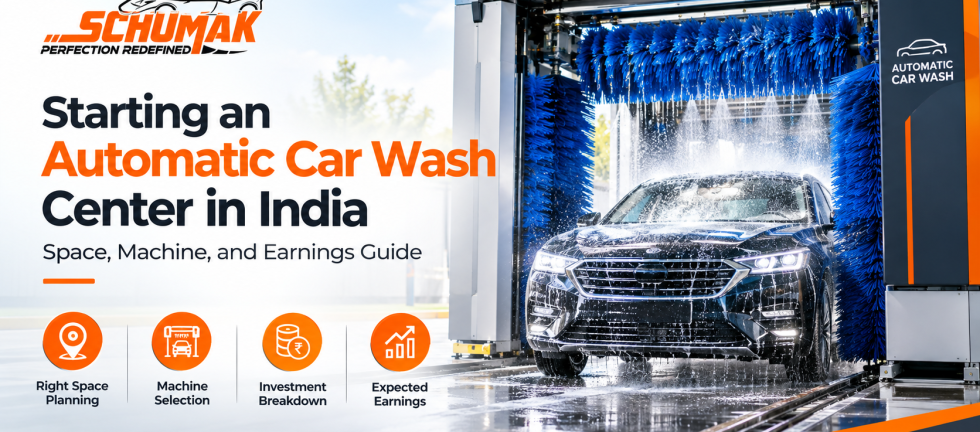
This year, the number of cars may exceed expectations due to the increased demand for fast and efficient car washing. An automatic car wash is quickly becoming the preferred choice for busy urban customers who don’t have time for a manual wash. This trend presents an opportunity to entrepreneurs, owners of car dealerships, and providers of fuel for cars, who have to learn how to take advantage of this phenomenon.
Establishing an automatic car wash facility means more than purchasing the car-washing machine and switching it on. It is necessary to choose a proper location, find out which auto-washing machine would be the best for your flow, plan your investment carefully, and determine what profits are realistic in order to start using your capital. This article discusses each step of these issues in detail.
No matter whether one is in the business of running a dealership service, operating a service station, or having a small washing business of his/her own, the principles remain the same.
Quick Answer: What Do You Need to Start an Automatic Car Wash Center?
In order to establish an automated car wash station in India, it is essential to have an area ranging from about 500 to 1,200 square feet that comes with proper drainage facilities and a three-phase power supply. You will also require the car washing machine which can either be a brush type machine or a touch less car wash unit as far as automated car washes are concerned. The financial requirements would vary as per the machine being used, construction of the plant, water management and funds for day to day expenses. The revenues generated would depend on the number of cars getting washed on a daily basis and the price charged per vehicle washed. Most successful businesses take about 18 months to 36 months for recovery of their startup investments.
Why the Automatic Car Wash Business Is Growing in India
In India, the growth of vehicle ownership in cities is increasing rapidly. With the improvement in people’s income levels and lead a busy life, people do not want to spend an hour washing their car using a bucket and sponge at home. Therefore, we can experience a normal rise in demand for organized car washing service providers in India, especially in big cities and growing tier-2 small towns.
In the beginning, dealerships and garage owners started automatic car washing services because of their great time and quality advantages. Now this trend has been picked up by independent business owners who have opened their car washing service points near residential areas, shopping malls, and highways.
Types of Car Wash Systems: Manual, Semi-Automatic, and Fully Automatic
Before investing, it helps to understand where an automatic car wash machine fits compared to other options.
| System Type | Description | Best Suited For |
| Manual wash | Hand wash with bucket, hose, and workers | Low-volume, low-investment setups |
| Semi-automatic | Pressure washer with some mechanical assistance | Small workshops, budget-conscious owners |
| Fully automatic (touchless) | Machine-controlled wash cycle, no brush contact with the car body | Dealerships, service centers, high-traffic locations |
| Fully automatic (brush type) | Machine-controlled wash using rotating brushes | High-volume operations prioritizing speed |
A touchless car wash system, like the ones manufactured by Schumak, uses high-pressure water jets and sensors instead of brushes, which reduces the risk of paint damage and works well for a mixed fleet of vehicle sizes. Brush-type systems can be faster per cycle but require more maintenance and carry a slightly higher risk of surface scratches if not properly calibrated.
Space Requirement for an Automatic Car Wash Center
The car wash space requirement is one of the very first things that entrepreneurs fail to realize. The washing space required for an automatic car wash needs to be larger than just the space occupied by the washing equipment.
Some crucial space considerations that need to be accounted for are as follow:
- Area required for the washing bay: Sufficient space for the car to come in, be analyzed for its length, and go out.
- Width and height of the car wash entrance: The straight path is always the best to avoid traffic jams.
- Customer Waiting area: A little area with sufficient shade for the customers who are waiting for their cars to be washed.
- Drainage mechanism: Proper slope and good water recycling and disposal arrangement as automatic car wash does consume copious amounts of water per wash.
- Electricity: Three-phase power connection is preferred as most of the automatic washing machines would require three-phase electricity to work efficiently.
- Water storage system: An overhead tank or underground tank according to your daily washing requirement alongside a good pump.
Most fully automatic setups need a covered area in the range of 500 to 1,200 sq ft, depending on whether you’re running a single machine or planning for future expansion.
Choosing the Right Automatic Car Wash Machine
Selecting the correct automatic car wash machine depends on your expected daily volume, vehicle types, and budget.
Touchless vs Brush Systems
Touchless machines, such as Schumak’s touchless car wash V1, rely on precision water jets rather than physical brushes. This makes them a strong choice for dealerships and service centers that handle a mix of vehicle finishes and want to minimize paint risk.
Cycle Time and Capacity
Cycle time directly affects how many vehicles you can process per hour. For reference, Schumak’s touchless car wash V1 operates on approximately a 3.5-minute wash cycle, using around 125 liters of water per car. Faster cycle times mean higher throughput during peak hours, which matters most at high-traffic locations.
Build Quality
Look for machines built with stainless steel 304 grade body construction, since this resists corrosion from constant water exposure and extends the equipment’s working life. Features like digital counters and car length sensing also help with operational tracking and reducing water wastage.
Typical Investment Breakdown
In order to set-up the automatic car wash, the entrepreneur must know that there is more to the investment than just the cost of the car wash machine. The breakdown usually consists of the following:
- Automatic car wash machine (whether the type is touchless or brush)
- Civil work like flooring and drainage
- Water tank as well as installation of pumps
- Electric work
- Branding as well as signage
- Working capital for consumables and initial workers
Depending on the capacity, the complexity of civil work and the place, the costs can vary significantly. It is advisable to get quotations from automatic carwash machine manufacturers prior to budgeting the expenses.
Earnings and ROI: Indicative Investment & Earnings Snapshot
Profitability from an automatic car wash depends heavily on daily volume, per-car pricing, and operating costs. The table below offers indicative ranges, not guaranteed figures, since actual results depend on your location, pricing strategy, and how consistently you run operations.
| Metric | Indicative Range |
| Per-car wash price | Depends on local market and vehicle segment |
| Daily wash capacity (single machine) | Typically 30 to 60 vehicles, depending on cycle time |
| Monthly revenue | Varies with volume and pricing consistency |
| Key operating costs | Water, power, consumables (foam, wax), staff wages, maintenance |
| Typical payback period | Around 18 to 36 months for well-located centers |
Car wash profit margins improve as fixed costs like machine investment and civil work are absorbed over time, while variable costs (water, power, consumables) stay relatively steady per wash. Tracking your daily wash count and per-car cost closely in the first few months will give you a much clearer picture of your actual car wash ROI than relying on industry averages alone.
Location Selection Tips
Location has an outsized impact on the success of any car wash center. Strong location options include:
- Near petrol pumps: Captures customers already stopping for fuel.
- Near service centers or dealerships: Natural add-on service for vehicle owners.
- Near malls and commercial complexes: Customers can wash their car while shopping.
- High-traffic roads and highways: Good visibility and consistent footfall.
Visibility from the main road, easy entry and exit, and adequate parking for waiting vehicles all contribute to steady daily volume, which is the single biggest driver of car wash business success.
Operational Considerations
Running a smooth automatic car wash center requires attention beyond the machine itself:
- Manpower: Even fully automatic systems need staff for vehicle positioning, monitoring, and customer service.
- Training: Operators should understand machine settings, basic troubleshooting, and safety procedures.
- Maintenance: Regular checks on pumps, nozzles, and sensors keep cycle times consistent and prevent costly downtime.
- Consumables: Budget for foam, wax, and cleaning chemicals as recurring costs.
- Digital tracking: A digital counter helps monitor wash volumes accurately, supporting better business decisions and transparent billing.
Partnering with a manufacturer that offers after-sales support, like Schumak’s team based in Coimbatore, can reduce downtime significantly since technical issues are resolved faster with local access to spares and service.
Frequently Asked Questions
How much space is needed for an automatic car wash center? Most automatic car wash setups need a covered bay of around 500 to 1,200 sq ft, including space for vehicle entry, exit, drainage, and a small waiting area for customers.
Is touchless or brush-type automatic car wash better for a new business? Touchless systems are generally preferred for mixed vehicle fleets since they reduce paint damage risk, while brush-type systems can offer faster cycle times for high-volume operations. The right choice depends on your customer base and throughput needs.
How long does it take to recover the investment in an automatic car wash machine? Payback period typically ranges from 18 to 36 months for well-located centers, depending on daily volume, pricing, and how consistently the business is operated.
Do I need a 3-phase power connection for an automatic car wash machine? Yes, most automatic car wash machines, including touchless systems, are designed to run on 3-phase power for stable and efficient operation.
Can an automatic car wash business be combined with an existing service center or dealership? Yes, many dealerships and service centers add an automatic car wash as a value-added service, which improves customer experience and creates an additional revenue stream from the same footfall.
Conclusion
Starting an automatic car washing center in India makes a lot of sense for investors, service station owners or dealers who have done the right planning regarding location, equipment and reasonable earnings predictions. Instead of relying too heavily on the equipment, there are many factors that must be taken into consideration to ensure that adequate space with proper drainage and power exists, the right equipment chosen for a particular volume and type of vehicles, efficient investment plan developed and site with sufficient traffic selected.
If you need equipment for a new or already existing business it’s advisable to deal with an experienced manufacturer in Coimbatore Schumak; they can provide you with useful advice on machinery selection, space planning and after sales service based on the experience gained in numerous projects.